KenBarkly
- 4.6
- Rating
- 100.00K
- Installs
- Free
- Price

 Analysis by App-foxy
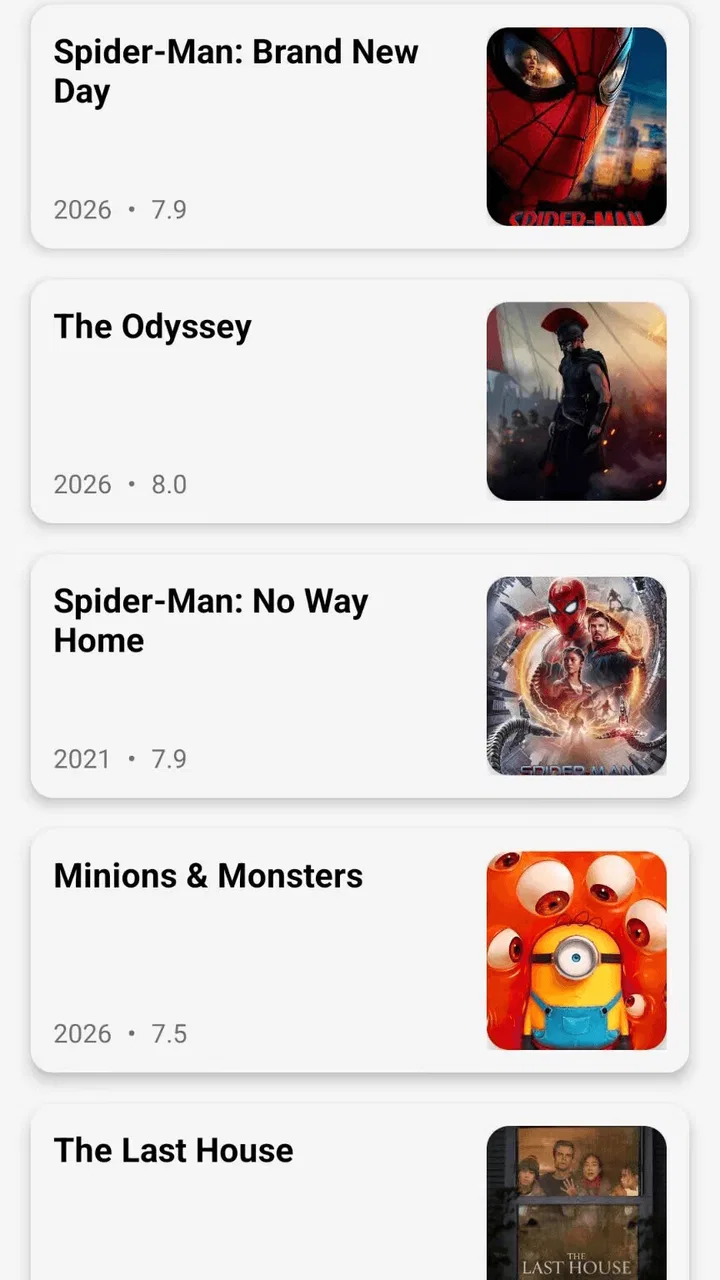
I approached KenBarkly as a small video-focused app rather than assuming that a short store description could tell me the whole story. Its public summary is simply “Trailers,” while the short description says “KenBarkly,” so the practical question is whether it gives you a useful way to view trailer-style video content without asking you to commit to a larger entertainment platform. My impression is cautious: it may appeal to someone who wants a lightweight place to browse trailers, but it is not an obvious replacement for a complete streaming, editing, or media-library app.
That distinction matters. KenBarkly is listed in the Video Players & Editors category, but that label covers very different experiences. Some apps in this area are full editors, others are media players, and some are discovery tools built around short video clips. Here, the clearest confirmed identity is the trailer focus. I would therefore judge it first by how comfortably it fits a quick browsing habit, not by expecting a timeline editor, a personal media server, or a full movie subscription service.
What KenBarkly feels like in everyday use
In my view, the strongest potential use case is a short viewing session. Imagine having a few minutes before deciding what to watch: instead of opening a large streaming service, navigating several menus, and dealing with unrelated recommendations, you use a focused trailer app to sample upcoming or interesting titles. That kind of narrow purpose can be convenient when you want inspiration rather than a film itself.
You May Also Like

 Blood Strike: 2.5 Anniversary
Blood Strike’s Loadouts Turn Every Drop Into a Tactical Gamble
A close look at Blood Strike’s custom loadouts: how fast access to signature weapons reshapes its battle royale rhythm, rewards preparation, and narrows the gap between fights.

 Pandora - Music & Podcasts
Pandora’s Music Is Easy to Start, but Harder to Recover
Pandora’s strength is its low-effort path from a seed to a station. Its weak spot is how much confidence it asks you to place in connection, setup, and quiet recovery.

 8 Ball Pool
 Is Built on Rivalries, Rematches, and Routine
A close look at the rivalries, rematches, shared routines, and unanswered safety questions that turn a quick pool match into a persistent mobile community.

 Samsung Music
’s Quiet Strength Is Playing What You Already Own
Its reach comes less from spectacle than from dependable access to a personal library. That simplicity is both the app’s strongest retention engine and its ceiling.

 AccuWeather: Weather Radar
AccuWeather Review: A Quick, Clear Forecast for Everyday Decisions
For everyday plans, the best forecast is the one you can understand quickly. AccuWeather makes rain timing, radar, and local conditions easy to act on, with a few trade-offs.

 Hill Climb Racing
Why Hill Climb Racing Still Turns Crashes Into One More Run
A tiny car, a bumpy hill and one more upgrade: Hill Climb Racing keeps resurfacing because its simple chaos makes every near-miss feel personal.
More From Our News Desk
View All News


The app is free, which lowers the barrier to trying it. It is also marked for Everyone, making the basic audience broad from an age-rating perspective. I would still treat that label as a content classification rather than a promise that every trailer will match every household’s preferences. Parents who want strict control over what appears on a screen should make their own judgement rather than relying only on the general rating.
KenBarkly comes from developer willman james and has reached over 100 thousand installs. Its average rating is 4.6 from around 1.1 thousand ratings, with 366 written reviews. Those figures suggest that the app has attracted a meaningful group of users and that the overall response is positive. They do not, by themselves, answer the questions I care about most: how transparent the app is while it is running, whether its content remains useful over time, and how much control it gives the person watching.
The current version is 1.1.2, and the minimum operating-system requirement is Android 7.0. That makes the compatibility threshold relatively approachable for people using older Android devices, although compatibility is only the starting point. A phone can meet the operating-system requirement and still offer a less comfortable experience if storage is tight, the connection is weak, or the display and speaker are modest.
Trust starts with what the app clearly lets you see
For a video app, trust is not only about whether a clip plays. It is also about whether I understand what I am opening, what happens when I tap a recommendation, and whether the app gives me a clear way to stop or leave. A focused trailer viewer should feel predictable: select a title, watch the relevant video, and return without being pushed through confusing steps.
That is the standard I would apply to KenBarkly. Because its public description is so brief, I would not assume that it includes a large catalogue, detailed filters, a watchlist, offline viewing, or a personalized account system. Those are useful features in other video products, but treating them as present without seeing them would create the wrong expectations. I would install it for the trailer-browsing idea itself, then decide whether its actual navigation earns a permanent place on my phone.
My practical advice is to spend the first session inspecting the visible choices before settling into browsing. Look at how a trailer opens, whether the back button behaves normally, whether any external page appears, and whether playback controls remain understandable. These small checks are more valuable than assuming that a high rating guarantees a frictionless experience on every device.
I also prefer to test a media app with the phone’s volume at a moderate level and with notifications under control. Trailer audio often moves quickly from quiet dialogue to loud music, so this is a simple comfort measure rather than a technical trick. If the app is being used in a shared room, captions or mute-friendly controls become especially important; if those controls are not easy to find, a mainstream video platform may be a better choice for that setting.
Permissions and data-sensitive moments deserve attention
Video apps can create several moments where users should slow down. The first is installation: I would read any permission request instead of accepting every prompt automatically. A trailer viewer should be understandable about why it needs access to a device function, and I would be uncomfortable granting broad access that does not seem connected to selecting or playing video.
The second moment is the first launch. I would check whether the app asks for an account, requests personal details, or presents choices that can be skipped. An account can be useful if it genuinely preserves preferences across devices, but it also creates an additional layer of personal-data management. If I only want to watch a few trailers, I would prefer to begin without creating a profile unless the app clearly explains the benefit.
The third moment is interaction with a trailer or title. A tap may start playback, open a detail page, or move to another service. I would watch for clear labels and avoid entering information into a page that feels unrelated to the original viewing task. This is not a claim that KenBarkly behaves improperly; it is a sensible habit whenever an app’s public description gives very little context about its wider workflow.
I would also review the app’s visible privacy and account controls before using it regularly. If there is a settings area, I would look for options related to notifications, saved activity, sign-in, and removal of an account or local data. If those controls are easy to locate, that improves my confidence because I can make choices rather than simply accept the default setup.
One useful test is to ask whether the app remains usable after declining an optional request. For example, if a notification prompt appears, I would postpone it and see whether trailer browsing still works. This separates a genuinely necessary step from a convenience request. It also keeps the first session focused on the app’s main purpose instead of allowing secondary prompts to define the experience.
Where a trailer app can fit better than the usual alternatives
Compared with a full streaming service, KenBarkly’s trailer-oriented identity could be an advantage when I want quick discovery without committing to a subscription catalogue. A streaming platform is better when I already know what I want to watch, need reliable playback of full-length content, or want profiles and mature parental controls. KenBarkly makes more sense for the earlier decision: “Does this look worth watching?”
Compared with a general video platform, a specialized trailer app could also reduce the amount of unrelated material competing for attention. General platforms are powerful because they offer creators, reviews, clips, commentary, and almost endless recommendations. That variety is useful, but it can turn a simple search into a long session of scrolling. A narrower tool can be calmer if its selection matches what I came to find.
The trade-off is depth. General platforms usually provide stronger search, creator information, captions, playback options, sharing tools, and account management. A dedicated app with a very short public description may not match that level of maturity. I would choose KenBarkly for a focused experiment, not because I expect it to replace every video service already on my phone.
It is also important not to confuse the category with editing capability. Being listed among Video Players & Editors does not mean I should install it expecting trimming, filters, transitions, recording, or export tools. If my goal is to make a trailer, cut a family video, or add music to a clip, I would choose a clearly identified editor instead. KenBarkly is better evaluated as a viewer and discovery app built around trailers.
Three practical ways I would test it
My first test would be a short, deliberate browsing session. I would open several trailers, return to the main screen between them, and note whether the route back is obvious. This reveals more than simply confirming that one video starts. It tells me whether the app supports the repeated decision-making that trailer browsing requires.
My second test would be a low-bandwidth situation. I would use it when the connection is less than ideal and see whether the app communicates loading clearly or leaves me wondering whether a tap worked. I would not judge a video app solely by perfect network conditions. For me, understandable feedback during buffering is part of trust, because it prevents repeated taps and accidental navigation.
My third test would be a privacy reset. After exploring the settings, I would check whether I can turn off unwanted notifications, sign out if an account is involved, and remove saved information through an understandable path. Even if I end up using the app only occasionally, these controls matter. A service earns confidence when it lets me leave as clearly as it lets me enter.
A fourth test is useful for families sharing one device: open the app with the sound low, inspect the visible content before handing over the phone, and see whether returning to the app exposes the same screen or a new recommendation. This is not a substitute for parental supervision, but it gives me a better sense of how predictable the viewing flow is. The Everyone rating is reassuring as a broad classification, yet personal household standards can be stricter.
Who will enjoy it, and who should skip it
I can see KenBarkly working for someone who likes browsing trailers in small bursts, wants a free app, and does not need a full entertainment ecosystem. It may also suit a user with an older Android phone who wants to try a focused video tool without needing a recent operating system. The low commitment makes experimentation reasonable, especially if the app’s visible controls feel clear during the first session.
I would be more hesitant to recommend it to someone who wants complete films, offline downloads, a sophisticated recommendation profile, or a dependable family account structure. I would also point editing-focused users elsewhere. The name of the category is broad, but the trailer emphasis does not suggest that this is the right place to produce or manage original video projects.
People who are particularly careful about permissions and personal information should take an extra minute before regular use. I would not infer a privacy problem from the limited public description, but I also would not infer a strong privacy model from a good rating. The responsible approach is to inspect the prompts, settings, account path, and any privacy information shown in the app, then use only the choices that make sense for your needs.
Another limitation is discoverability itself. With “Trailers” as the store summary and “KenBarkly” as the short description, a new user may have to learn the app by trying it rather than by reading a detailed explanation beforehand. That can be acceptable for a free download, but it means I would avoid installing it when I need a known feature immediately. A clearly documented alternative is safer when the task is specific and time-sensitive.
My cautious verdict after weighing the trade-offs
KenBarkly is interesting because it appears to keep its purpose narrow: trailers, viewed through a free Android app from willman james. Its positive average rating and established install base make it worth a measured trial, while its Everyone classification and Android 7.0 requirement make it accessible to a broad range of users. I would describe it as a potentially handy discovery tool, not as a complete video platform.
The key is to judge it by transparency and control as much as by playback. I would look for understandable navigation, optional prompts that can be declined, sensible permission requests, and settings that let me manage notifications or account-related choices. Those details determine whether a quick trailer session stays quick and whether I feel in charge of the experience.
My recommendation is to try KenBarkly when your goal is simple trailer browsing, but keep expectations deliberately modest. If it opens the right content cleanly and respects the choices visible on your device, it can earn a place as a lightweight companion to your usual streaming services. If you need full-length viewing, advanced search, editing tools, offline access, or stronger account controls, I would choose a more established alternative in that specific area instead.
In short, I would not install it because the category sounds broad or because the rating settles every question. I would install it because the trailer focus is useful, test the first session carefully, and keep it only if the app gives me a clear path from selection to playback and back again. That is the fairest way to approach KenBarkly: open-minded about its simple purpose, attentive to user agency, and unwilling to assume more than the experience actually shows.
FAQs for KenBarkly
01What is KenBarkly, and what can I use it for?
KenBarkly is presented as an app centered on dog-related care, information, or services, depending on the features available in your region. Before downloading, review its store description carefully to confirm whether it supports the activities you need, such as managing pet information, accessing guidance, arranging services, or communicating with other users. The exact experience may vary between Android and iOS versions.
02Is KenBarkly free to download and use?
KenBarkly may be available as a free download, but some functions could require in-app purchases, a subscription, registration, or payment for specific services. Check the app store listing for current pricing, trial conditions, and renewal details before installing it. If payment is required, read the cancellation policy carefully, since deleting the app normally does not automatically cancel an active subscription.
03What information or permissions does KenBarkly require?
During setup, KenBarkly may request information such as your name, email address, location, pet details, or account credentials. Depending on its features, it could also ask for access to notifications, photos, camera, contacts, or location services. Only grant permissions that are necessary for the functions you plan to use, and review the privacy policy to understand how personal and pet-related data are stored or shared.
04Does KenBarkly work on both Android and iPhone?
KenBarkly may be offered for Android and iOS, although supported devices, operating-system requirements, and available features can differ. Before downloading, verify the official Google Play or App Store listing and check the minimum version required. Older phones may experience slower performance or lack certain functions. Installing updates is also recommended because developers often use them to improve stability, security, and compatibility.
05Is KenBarkly safe and reliable for everyday use?
The safest way to use KenBarkly is to download it only from an official app store, confirm the developer name, and examine recent user reviews before creating an account or submitting sensitive information. Avoid sharing unnecessary personal details, payment data, or private pet records. Also remember that an app should complement, not replace, professional veterinary advice when your pet has an urgent or serious health problem.
Pros
- Simple interface makes core features easy to find.
- Useful for organizing pet-related information in one place.
- Convenient access to KenBarkly services from a mobile device.
- Can help reduce the need for paper records and reminders.
- Suitable for users who prefer managing tasks digitally.
Cons
- Some features may require an active internet connection.
- The app may feel limited for users with multiple pets.
- Notifications could become easy to overlook if poorly configured.
- Compatibility and performance may vary across older devices.
- Users may need to create an account before accessing key tools.

KenBarkly
Gallery